You find a perfectly round hole in your porch railing, spot a little pile of sawdust underneath it, and naturally wonder what that big carpenter bee is doing inside the wood.
Is it actually eating your porch?
It certainly looks that way. Carpenter bees can chew tunnels into solid lumber, and some return to the same wooden structures year after year.
But here’s the interesting part.
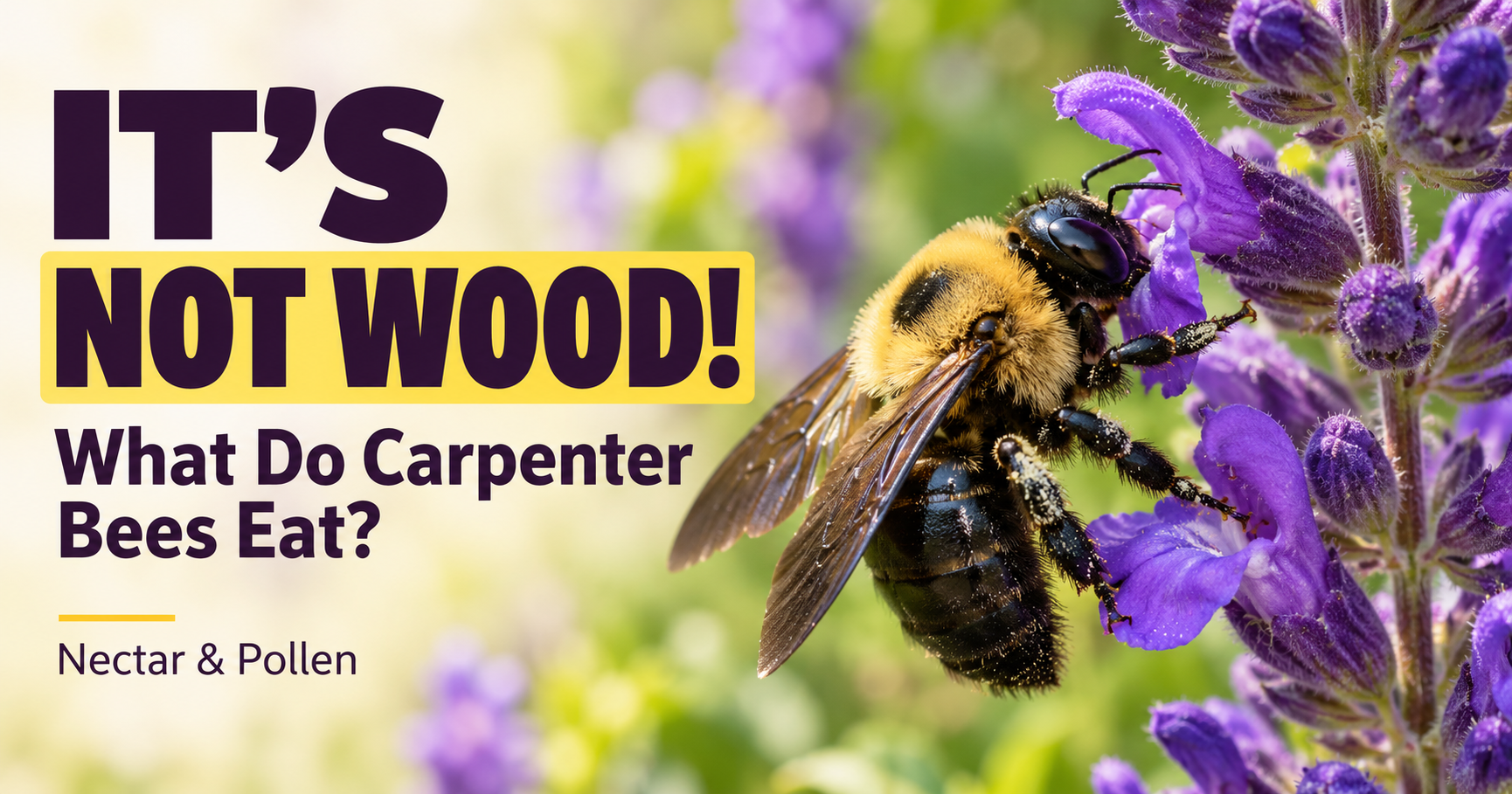
Carpenter bees don’t eat wood. They eat nectar and pollen from flowers. The holes they drill are nesting galleries where females lay their eggs and raise their young.
Even the baby carpenter bees don’t eat wood. Their mothers leave them specially prepared food made from pollen and nectar.
That doesn’t mean carpenter bees can’t damage a house. They absolutely can. But once you understand what they’re eating and why they’re digging into wood, their behavior starts making a lot more sense.
What Do Carpenter Bees Eat?
Adult carpenter bees primarily feed on flower nectar, while females collect pollen as well.
Nectar provides energy in the form of sugars. Pollen supplies important nutrients, including proteins and fats, that help support the development of their young.
You may see carpenter bees visiting flowers throughout spring and summer, particularly when temperatures are warm enough for them to be active.
The eastern carpenter bee, Xylocopa virginica, is especially common throughout much of the eastern United States, including Missouri.
Like many other native bees, it visits a variety of flowering plants.
Do Male and Female Carpenter Bees Eat the Same Thing?
Both male and female carpenter bees consume nectar.
However, females have another important responsibility.
They collect pollen and nectar to prepare food for their offspring.
A female may make repeated trips between flowers and her nesting gallery as she provisions the individual chambers.
Males don’t perform that nesting work. They spend much of the breeding season searching for females and patrolling territories, while still visiting flowers for food.
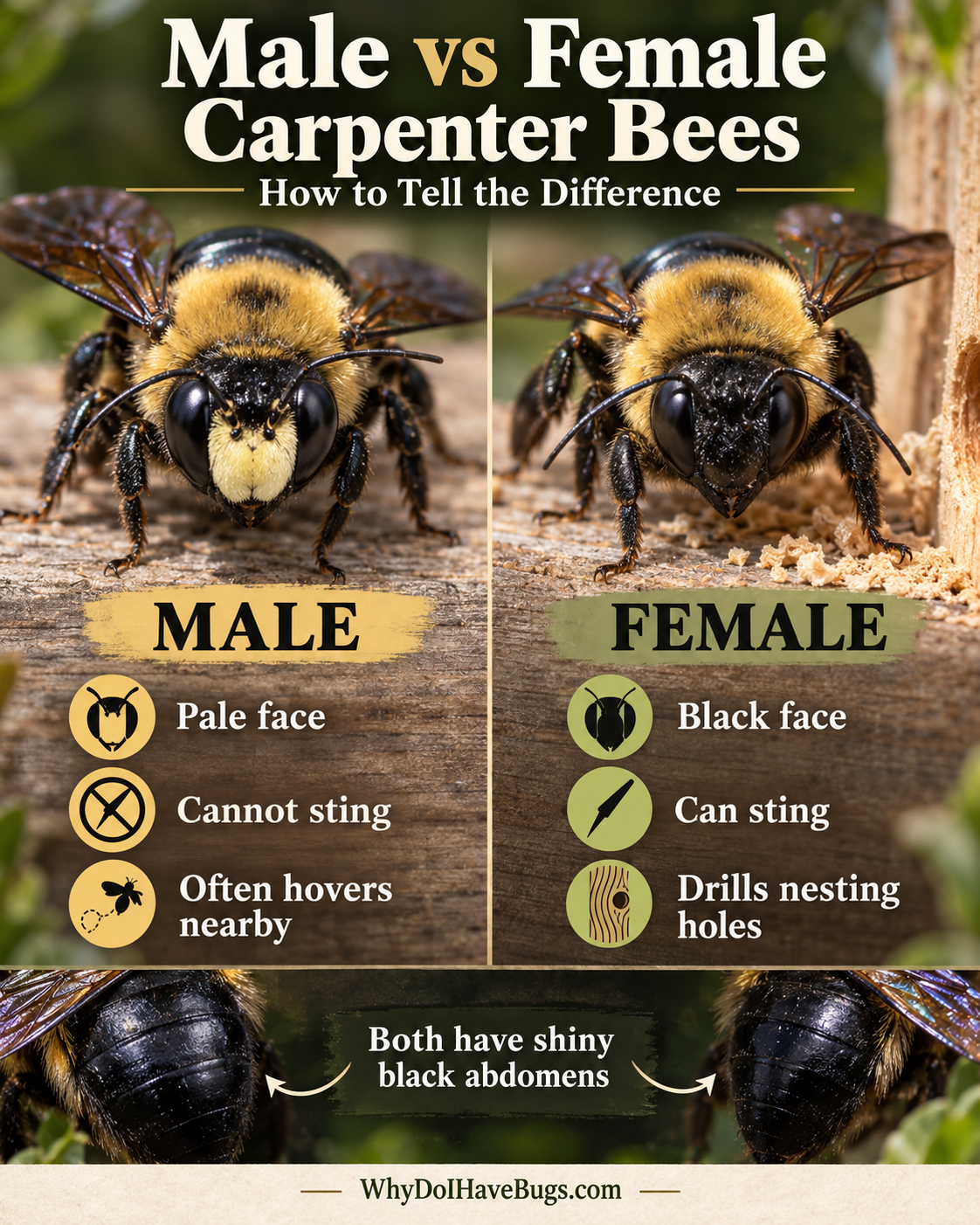
If you’ve ever noticed that male and female carpenter bees behave differently, their different reproductive roles explain a lot of what you’re seeing.
Do Carpenter Bees Eat Wood?
No. This is probably the biggest misconception about carpenter bees.
Unlike termites, carpenter bees don’t use wood as food.
Female carpenter bees have powerful mandibles that allow them to chew tunnels into wooden structures.
They remove wood particles while excavating a place to raise their young.
The wood is building material, not dinner.
Why Do Carpenter Bees Chew Holes in Wood?
A female carpenter bee needs a protected nesting location.
She may reuse an existing gallery or excavate a new tunnel inside suitable wood.
Large eastern carpenter bees typically make an entrance hole around half an inch across.
The tunnel extends inward before turning and continuing along the grain.
Inside, the female creates separate chambers for individual offspring.
Each chamber receives an egg and a prepared supply of food.
She uses chewed wood particles to help construct partitions separating the chambers.
What Happens to All the Sawdust?
As the female chews through wood, she pushes excess wood particles out of the entrance.
That’s why you might notice fresh sawdust beneath a railing or fascia board.
This material is evidence of excavation, not proof that the bee is eating the wood.
The damage can still be significant when multiple nesting galleries develop in the same structure.
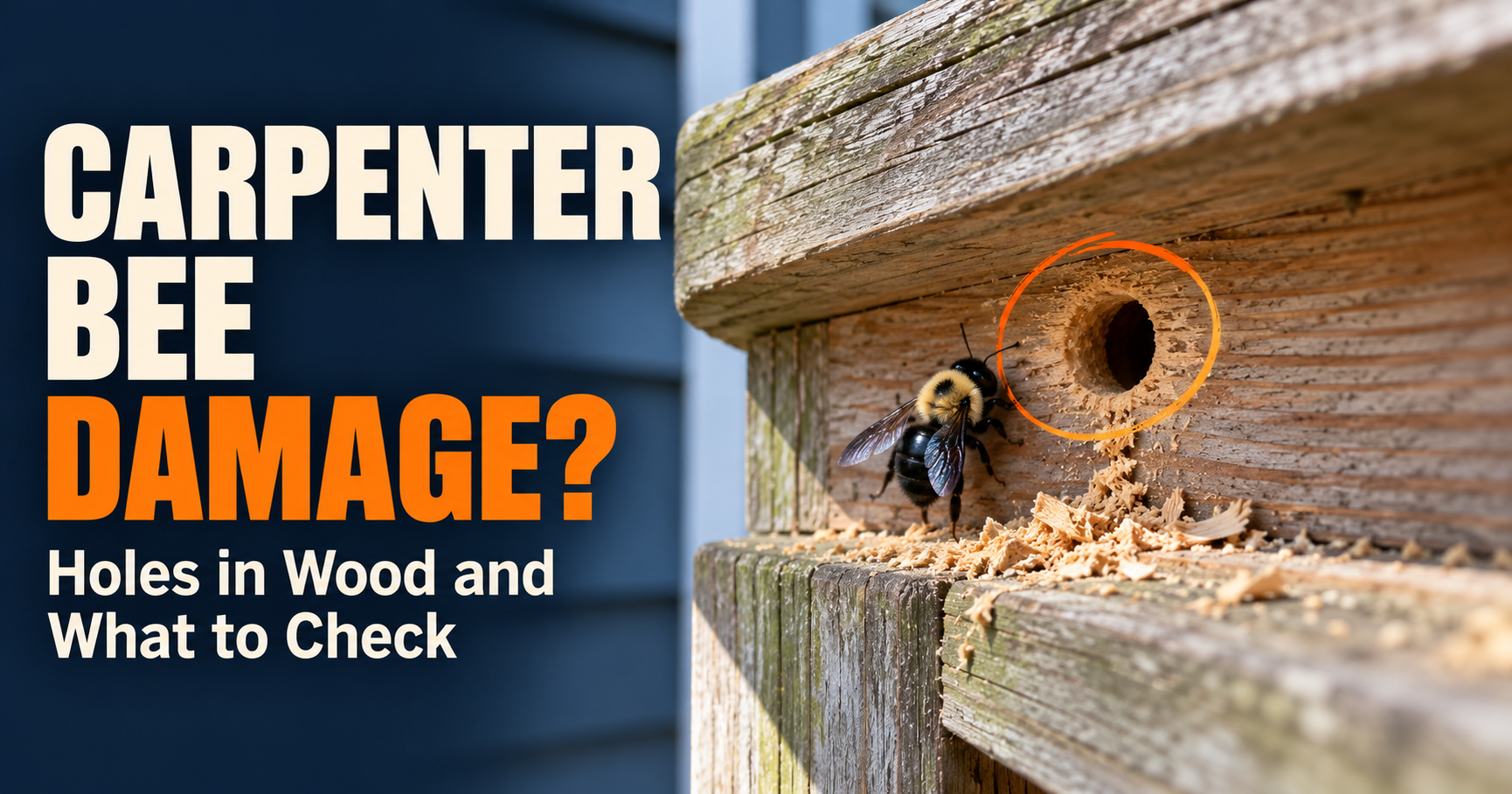
For a closer explanation, see our guide to what carpenter bee holes and wood damage look like.
What Do Baby Carpenter Bees Eat?
Baby carpenter bees have a surprisingly convenient arrangement.
They don’t leave the nest to search for food.
Instead, their mothers prepare everything they need before they hatch.
Carpenter Bee Larvae Eat Bee Bread
Female carpenter bees collect pollen from flowers and combine it with nectar to create a food provision commonly called bee bread.
This isn’t bread in the ordinary sense.
It’s a nutrient-rich mixture that provides food for the developing larva.
The female places a portion inside a nesting chamber and lays an egg with it.
She then closes the chamber using a partition made from wood particles.
When the egg hatches, the larva feeds on the food its mother left behind.
Do Carpenter Bee Larvae Eat the Inside of the Nest?
No.
The larvae rely on the provisions inside their chambers rather than chewing the surrounding wood.
This is an important difference between carpenter bees and genuinely wood-feeding insects.
A carpenter bee gallery can cause damage because of the mother’s excavation, but the larvae aren’t eating their way through your deck.
Once they develop into adults, they emerge and eventually begin visiting flowers themselves.
What Flowers Do Carpenter Bees Like to Eat From?
Carpenter bees visit many kinds of flowers, and their preferences can vary by species, location, and season.
They tend to visit flowers offering accessible nectar and pollen.
In Missouri and other parts of the eastern United States, you might see them around native wildflowers, flowering shrubs, garden plants, and various other blooming plants.
Carpenter Bees and Passionflowers
Passionflowers are one example of plants visited by eastern carpenter bees.
The Missouri Department of Conservation identifies carpenter bees as pollinators of passionflowers, also called maypops.
These large flowers can provide resources for visiting bees.
Carpenter Bees and Tomatoes
Carpenter bees are capable of buzz pollination, an unusual behavior that helps certain flowers release pollen.
Tomatoes are one of the plants that benefit from this type of pollination.
Tomato flowers don’t offer nectar in the same way many ornamental flowers do, but they provide pollen.
A carpenter bee can vibrate the flower, helping release pollen from its anthers.
That makes the bee useful for pollination, even though the plant isn’t necessarily providing a nectar meal.
Carpenter Bees and Eggplants
Eggplants are another familiar garden crop that benefits from buzz pollination.
Their flowers have pollen-producing structures that release pollen when vibrated.
Carpenter bees and bumblebees can help move pollen while visiting these flowers.
Do Carpenter Bees Like Every Flower?
No.
Flower shape, availability, nectar rewards, and the local carpenter bee species all influence which flowers receive visits.
Some flowers are easier for large bees to access than others.
Carpenter bees may even use unusual feeding methods to reach nectar in flowers that are too deep for them.

Why Do Carpenter Bees Sometimes Bite Holes in Flowers?
Here’s a behavior that surprises people.
Sometimes carpenter bees make small openings near the base of flowers to reach nectar.
This is called nectar robbing.
Instead of entering through the normal flower opening, the bee accesses the nectar from the side.
Does Nectar Robbing Hurt Flowers?
It can damage a small part of the flower.
More importantly, when a bee bypasses the reproductive structures, it may collect nectar without pollinating that particular flower.
However, this doesn’t mean carpenter bees are bad pollinators overall.
They visit many other flowers normally and can be effective pollinators of certain plants.
Nectar robbing is simply one part of their feeding behavior.
Do Other Bees Use These Holes?
Yes.
Other insects may sometimes use openings created by nectar-robbing bees to reach the nectar inside flowers.
This can allow them to feed without contacting the flower’s reproductive structures.
It’s one of those interesting examples of how insects can influence one another’s feeding behavior.
Do Carpenter Bees Eat Honey?
Carpenter bees don’t produce and store large quantities of honey like honey bees.
They collect nectar and pollen, but they have very different nesting and food-storage habits.
Female carpenter bees prepare individual food provisions for their offspring rather than maintaining large honey-filled combs.
Do Carpenter Bees Steal Honey From Honey Bee Hives?
They’re not known as regular honey thieves.
Carpenter bees are primarily interested in obtaining nectar and pollen from flowers.
Finding carpenter bees around your property doesn’t mean they’re trying to rob your honey bee hives.

Do Carpenter Bees Eat Insects?
No. Carpenter bees aren’t predatory insects.
They don’t hunt mosquitoes, flies, caterpillars, or other bugs for food.
Their adult diet revolves around flower resources, especially nectar.
Females also collect pollen for their developing young.
This makes them different from certain wasps that capture insects to feed their larvae.
If you see a large black-and-yellow insect carrying a captured caterpillar, it probably isn’t an ordinary carpenter bee.
Correct identification matters because bees and wasps can look surprisingly similar from a distance.
Do Carpenter Bees Eat Sugar Water?
Carpenter bees naturally feed on nectar, which contains sugars.
They may sometimes investigate accessible sugary liquids, but that doesn’t mean homeowners should routinely offer them sugar water.
Healthy wild carpenter bees generally don’t need artificial feeding.
Providing open containers of sugar water can attract other insects and create unnecessary problems.
If you want to help carpenter bees, flowering plants that provide natural nectar and pollen are a better long-term choice.
Should You Feed Carpenter Bees?
Usually not.
Wild carpenter bees are capable of finding food when suitable flowers are available.
Creating a yard with a variety of flowering plants is more useful than putting out artificial feeders.
Aim for flowers blooming at different times so pollinators have resources throughout the growing season.
What Do Carpenter Bees Eat in Winter?
Carpenter bees don’t normally forage for flowers during cold winter weather.
In temperate regions, adults may overwinter inside existing wooden nesting galleries.
Their activity and energy use decrease during cold periods.
They rely on stored energy reserves while sheltering.
When temperatures warm in spring, surviving adults become active again and begin visiting flowers.
Do Carpenter Bees Store Food for Winter?
Carpenter bees don’t maintain large communal honey stores like honey bees.
Their food-storage behavior is primarily associated with provisioning brood cells for developing larvae.
Adults overwinter using energy reserves accumulated during their active periods.
Can Carpenter Bees Starve if There Aren’t Enough Flowers?
Like other animals, carpenter bees need adequate nutrition.
Adults require energy for flying and other activities.
Females also need access to pollen and nectar to provision offspring.
A lack of suitable flowering plants can reduce available food resources.
However, you shouldn’t assume a carpenter bee will starve simply because your yard doesn’t have flowers.
These insects can travel beyond a single property to find food.
Planting appropriate native flowering plants can help support local pollinator populations over time.

How Carpenter Bees Help Your Garden
Carpenter bees sometimes frustrate homeowners because of their nesting habits, but they’re also valuable native pollinators.
They visit flowers, transfer pollen, and contribute to the reproduction of many plants.
Their ability to buzz-pollinate certain flowers makes them particularly interesting.
Are Carpenter Bees as Useful as Bumblebees?
Both groups provide important pollination services.
Bumblebees and carpenter bees can perform buzz pollination.
However, their nesting behavior, foraging habits, and interactions with flowers differ.
Neither should be dismissed as unimportant.
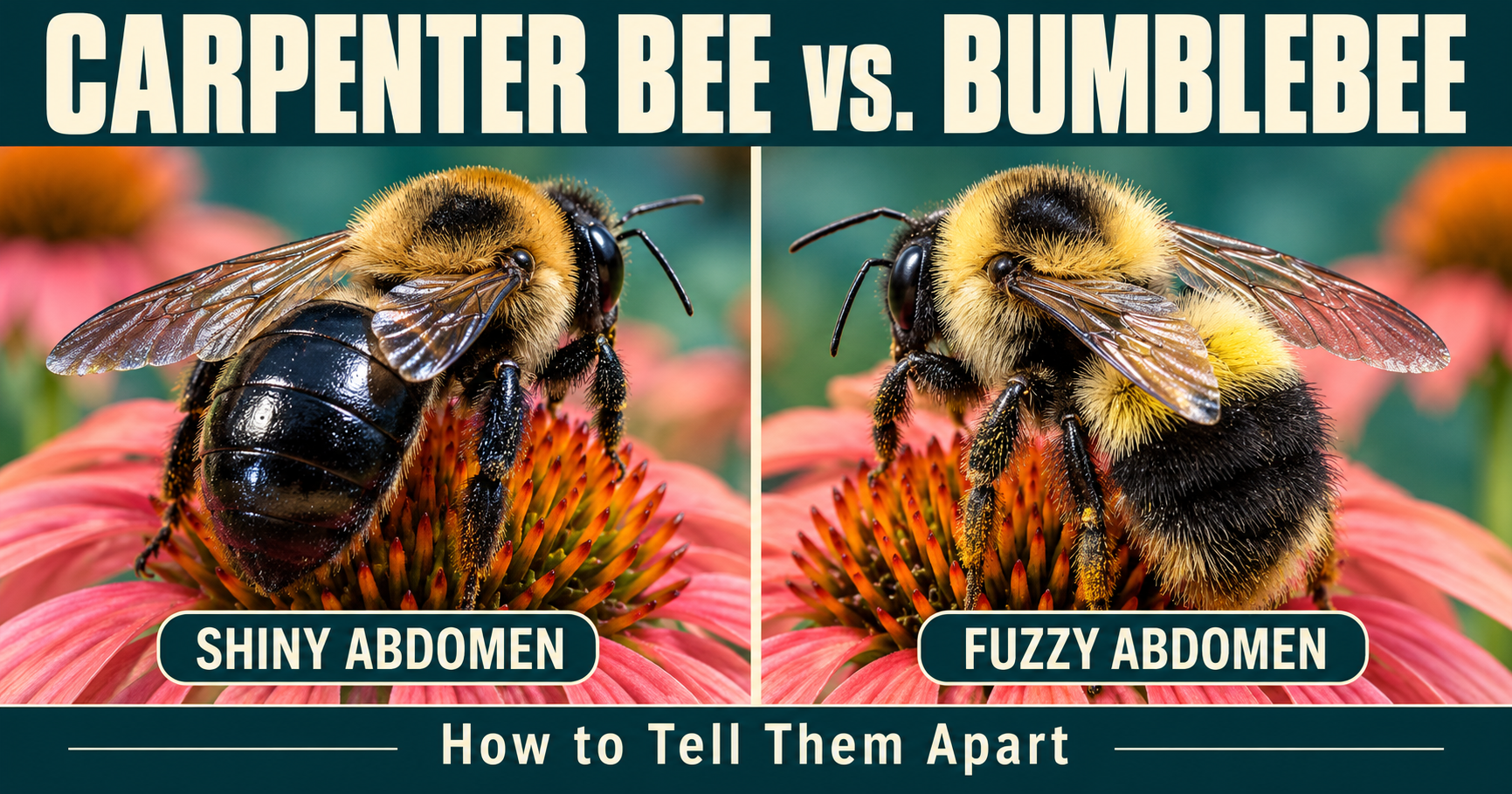
We have a separate guide comparing carpenter bees and bumblebees if you’re trying to identify which one is visiting your flowers.
Should You Leave Carpenter Bees Alone?
Whenever practical, yes.
If carpenter bees are simply visiting flowers or nesting in harmless deadwood away from structures, there’s usually no reason to interfere.
They’re part of a healthy pollinator community.
But if they’re drilling into your deck, siding, or important wooden supports, protecting those materials is reasonable.
The goal doesn’t have to be eliminating carpenter bees from your yard.
It can be discouraging nesting in structures while allowing the bees to continue pollinating plants elsewhere.
How to Protect Wood Without Killing Carpenter Bees
If your problem involves carpenter bees drilling into a porch or deck, focus on the wood rather than the bees’ food sources.
Removing flowers from your yard isn’t an appropriate carpenter bee control strategy.
It would reduce resources for beneficial pollinators without necessarily making vulnerable wood less attractive for nesting.
Instead, maintain properly painted or protected wooden surfaces.
Repair old galleries when they’re confirmed unoccupied.
Replace severely damaged components when necessary.
Can Carpenter Bee Repellent Help?
Some homeowners also consider purpose-made deterrents for appropriate outdoor wood surfaces.
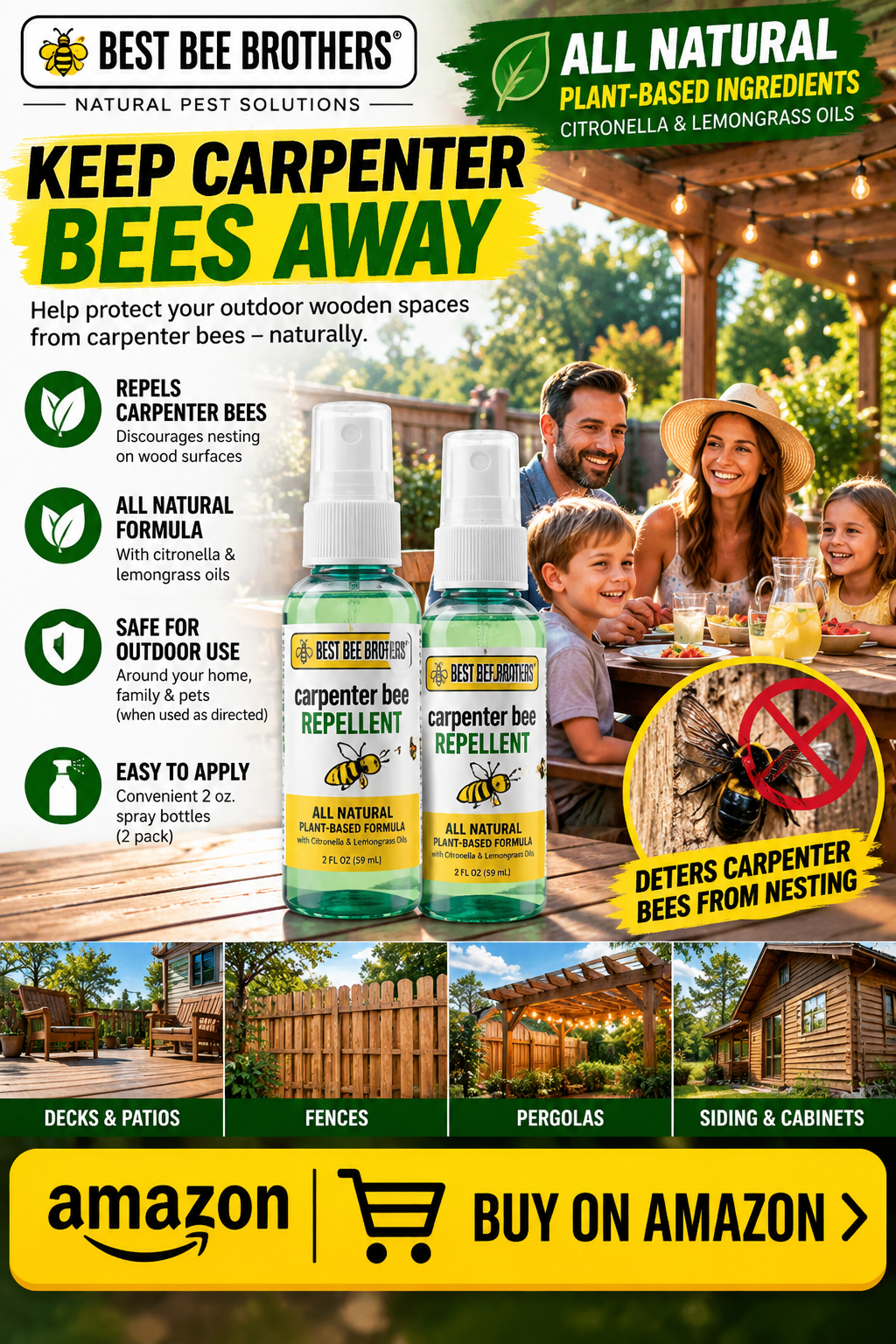
One example is Best Bee Brothers Citrus Carpenter Bee Repellent Spray , which contains lemongrass and citronella oils and is marketed for discouraging new nesting.
Its effectiveness hasn’t been independently established here, so I wouldn’t rely on it as the only method of protection.
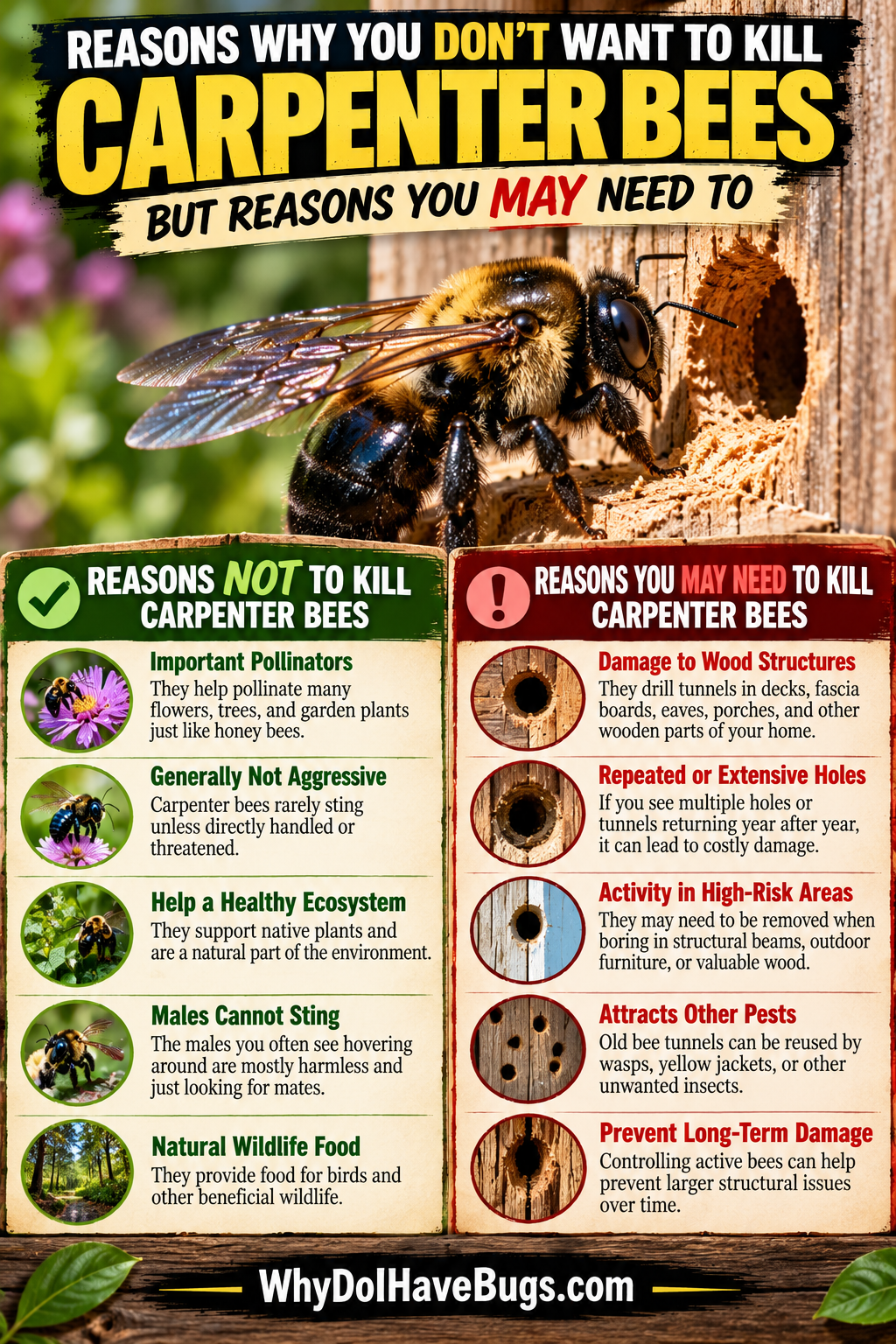
Our guide to keeping carpenter bees away without killing them explains the practical prevention options in more detail.
Frequently Asked Questions
Do carpenter bees eat wood?
No. Carpenter bees chew tunnels into wood to create nesting galleries, but they feed on nectar and pollen rather than consuming wood.
What do adult carpenter bees eat?
Adult carpenter bees primarily consume nectar from flowers. Females also collect pollen and nectar to provide food for their offspring.
What do baby carpenter bees eat?
Carpenter bee larvae eat food provisions made from pollen and nectar that their mothers place inside individual nesting chambers.
Do carpenter bees eat pollen?
Yes. Females collect pollen to provision their nests, and adults may consume pollen while visiting flowers.
Do carpenter bees eat flowers?
They visit flowers for nectar and pollen. They generally don’t consume petals or leaves as their primary food.
Do carpenter bees eat mosquitoes?
No. Carpenter bees don’t hunt mosquitoes or other insects for food.
Do carpenter bees eat honey?
Carpenter bees don’t depend on honey produced by honey bee colonies. They naturally collect nectar and pollen from flowers.
Do carpenter bees like tomato plants?
Carpenter bees can visit tomato flowers and contribute to pollination through buzz pollination. Tomatoes provide pollen rather than nectar.
Can carpenter bees pollinate vegetables?
Yes. Carpenter bees can pollinate various flowering vegetables, including certain crops that benefit from buzz pollination, such as tomatoes and eggplants.
Why do carpenter bees drill into wood if they don’t eat it?
Female carpenter bees excavate wood to construct protected chambers where they lay eggs and raise their larvae.
Do carpenter bees eat dead wood?
No. They may excavate suitable dead or seasoned wood for nesting, but they don’t use the wood as food.
Should I remove flowers to keep carpenter bees away?
No. Removing flowers isn’t a reliable way to prevent carpenter bees from nesting in wooden structures, and it unnecessarily reduces food resources for beneficial pollinators.
About the Author: The writers at Why Do I Have Bugs help homeowners understand insects, protect their property, and appreciate the important roles many of these creatures play in nature.