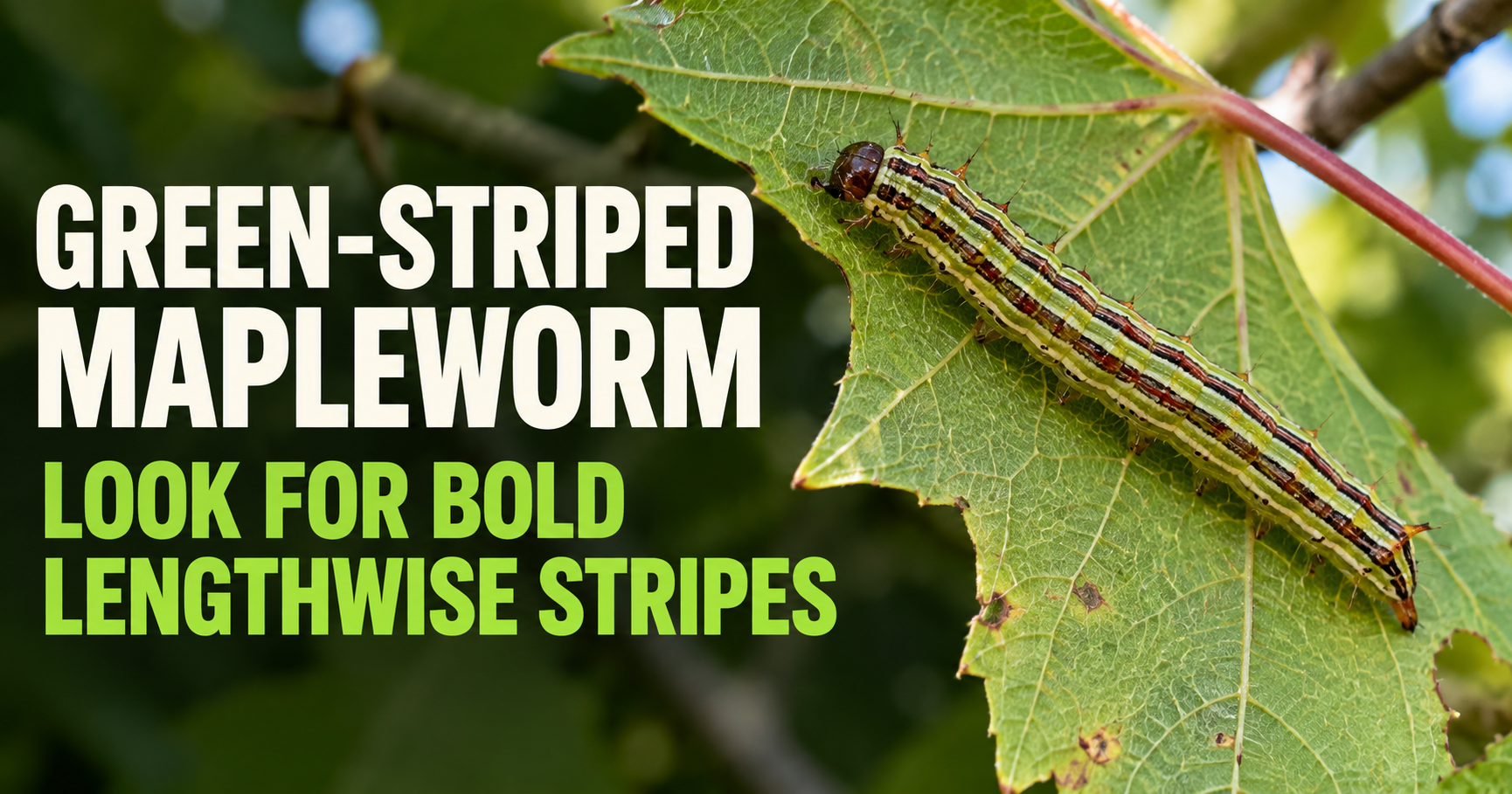
A green-striped mapleworm is the caterpillar stage of the rosy maple moth. Despite the name, it does not always look bright green. Young green-striped mapleworms can be tiny, dark brown, reddish brown, or yellow-green with pale lengthwise stripes, which makes them easy to mistake for some other kind of little tree caterpillar.
They feed mainly on maple trees, but they can also feed on oak trees. That is why people may suddenly find them gathering on maples and oaks in parks, yards, and wooded areas during late summer.
The adult rosy maple moth is famous for its soft pink-and-yellow wings. The caterpillar looks much less glamorous at first, especially when it is still small.
What Do Young Green-Striped Mapleworms Look Like?
Young green-striped mapleworms are much different from the large, bright green caterpillars people usually see in online photos. Early in life, they may look slender, dark, smooth, and striped rather than plump and colorful.
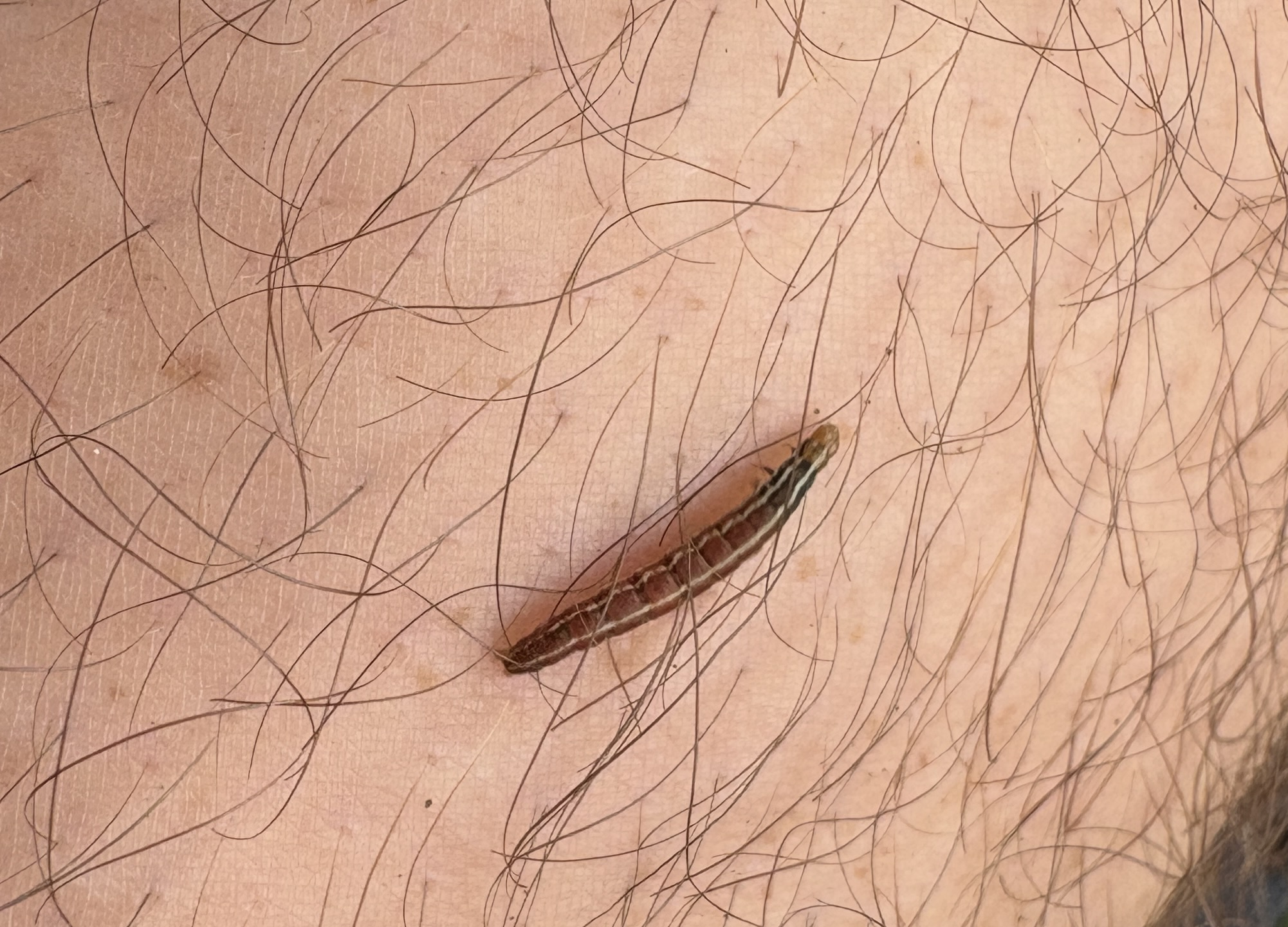
A young caterpillar may have a brown, reddish brown, olive, or yellow-green body with thin cream, pale yellow, or greenish stripes running lengthwise. Its head can look disproportionately large and dark compared with the rest of its body.
The most useful thing to look for is the area right behind the head. Green-striped mapleworms develop a pair of dark horn-like bumps there. On very young caterpillars, those horns can be small and difficult to notice without a close photo.



What Do Older Green-Striped Mapleworms Look Like?
As they grow, green-striped mapleworms become much easier to identify. Older caterpillars are thicker and commonly yellow-green to bright green with darker green, black, or white stripes running down the body.
Their head often becomes yellow, orange, or reddish. The two black horns behind the head become more obvious, and rows of small black spines may be visible along the sides.
A fully grown green-striped mapleworm can reach close to two inches long. That is a huge change from the tiny half-inch caterpillars people may notice earlier in the season.


Why Are Tiny Caterpillars Hanging From Trees on Silk?
Small caterpillars can produce silk from structures near their mouths. When they are disturbed, crowded, blown by wind, or moving away from a feeding area, they may lower themselves from a leaf on a single thread.
That is why they can seem to come out of nowhere. A person may be standing beneath a maple or oak tree when several tiny caterpillars slowly lower down, wiggle on the thread, land on clothing or skin, and then crawl away.
It is annoying, but these caterpillars are not trying to land on people. They are using the silk line as a safety rope and a way to move away from the canopy.
Do Green-Striped Mapleworms Feed on Maple Trees?
Yes. Maple is their main host, including red maple, silver maple, sugar maple, and boxelder. They can also feed on oak trees and sometimes beech or other nearby deciduous trees.
Young caterpillars may feed together for a while, which is why a tree can suddenly seem full of them. As they grow, they become more independent and spread out across the foliage.
A large group can chew noticeable holes or missing sections from leaves. On a healthy established tree, the damage is usually more alarming-looking than dangerous.


Can Green-Striped Mapleworms Damage a Tree?
They can defoliate small portions of a tree when their numbers are high, but healthy established maples and oaks usually recover without long-term harm. The tree has already done most of its annual growing by the time late-summer feeding becomes obvious.
Young, newly planted, drought-stressed, or already unhealthy trees deserve closer attention. A small tree with repeated heavy feeding may need help staying watered and healthy.
Do not assume every chewed maple leaf means green-striped mapleworms are the cause. Look for the caterpillars themselves, the stripe pattern, dark head, and the horn-like bumps behind the head before treating anything.
Are Green-Striped Mapleworms Dangerous to People?
No. Green-striped mapleworms do not sting, bite, or carry disease. The little spines on older caterpillars are not venomous stingers.
They can wiggle quickly and feel unpleasant when they land on bare skin, but they are harmless. Gently brush one off rather than crushing it against your skin or clothing.
If a caterpillar is very fuzzy, covered in long hairs, or has dramatic spines, treat it as a different situation and avoid handling it. There are other caterpillars that can cause skin irritation, but green-striped mapleworms are not one of them.


Why Are They So Common on Some Trees?
Rosy maple moths lay eggs in groups on suitable host trees. When many eggs hatch in the same area, there can be a sudden burst of tiny caterpillars feeding on the same maple or oak canopy.
Weather also matters. Warm late-summer conditions can make caterpillar activity more noticeable, especially in parks with mature maples and oaks that provide lots of available leaves.
Most years, birds, wasps, spiders, parasitic insects, and disease naturally keep their numbers from becoming a serious issue. A big local hatch can still make an afternoon under the wrong tree memorable.
What Happens After Green-Striped Mapleworms Finish Feeding?
After growing through several stages, mature caterpillars leave the tree and pupate in the soil below it. They spend the winter there in a protected pupal chamber.
The adult rosy maple moth emerges later, usually during the warmer part of the year. It is one of the prettiest native moths in the eastern United States, with yellow wings marked in pink.
That is one reason I would not treat a few caterpillars on a healthy tree. They are part of the life cycle of a harmless native moth.
Should You Get Rid of Green-Striped Mapleworms?
For a mature, healthy maple or oak, treatment is usually not necessary. A few caterpillars, or even a noticeable group, rarely justify spraying a large tree.
If a young ornamental tree is being heavily defoliated, first confirm the ID. Then look for the caterpillars while they are still small and actively feeding. A product containing Bt, labeled for caterpillars on the specific tree or use site, may be an option when used exactly according to its label.
Avoid spraying simply because caterpillars dropped from a tree during an outdoor event. They are temporary, harmless to people, and do not need to be eliminated from a public landscape just because they are irritating.
How to Tell Green-Striped Mapleworms From Similar Caterpillars
Green-striped mapleworms are commonly confused with inchworms, fall webworms, tent caterpillars, and leafrollers.
Green-Striped Mapleworms vs. Inchworms
Inchworms move by making a pronounced loop or arch with their body. Green-striped mapleworms crawl in a more typical caterpillar motion and do not have that strong looping walk.
Cankerworms are a type of inchworm. Their caterpillars are usually a spring problem, even though fall cankerworm adults appear later in the year.
Green-Striped Mapleworms vs. Fall Webworms
Fall webworms are hairy caterpillars that live in large, messy communal webs wrapped around branch tips. Green-striped mapleworms are smooth or lightly spined, not hairy, and do not make those big obvious branch-tip tents.
Green-Striped Mapleworms vs. Tent Caterpillars
Tent caterpillars are hairy and appear in spring. Their webbing is much more visible and is usually found in branch forks or along branches, rather than as tiny individual silk lines from the canopy.
Green-Striped Mapleworms vs. Leafrollers
Leafrollers are often smooth, small caterpillars that use silk to fold or tie leaves into a shelter. They can also drop on silk threads, so they may look similar at first.
The paired dark horns behind the head, changing green-striped body pattern, and maple-or-oak host tree are better clues for identifying green-striped mapleworms.

Frequently Asked Questions
Are green-striped mapleworms really green?
Older ones usually are, but young caterpillars can be dark brown, reddish, olive, or yellow-green with pale stripes. That is why they are often misidentified.
What does a green-striped mapleworm turn into?
It becomes a rosy maple moth, a yellow-and-pink native moth found across much of the eastern United States.
Do green-striped mapleworms hang from silk?
Small caterpillars can lower themselves from foliage on silk threads when disturbed or dispersing. They are not trying to land on people.
Do green-striped mapleworms bite?
No. They do not bite, sting, or carry disease. They may crawl quickly and wiggle when handled, but they are harmless.
Why are green-striped mapleworms on oak trees?
Maples are their main host, but oak trees can also support them. Finding them on an oak does not rule them out.
Will green-striped mapleworms kill my maple tree?
Very unlikely. Healthy established trees normally recover from their feeding. Very young or stressed trees are the ones worth watching more closely.
When are green-striped mapleworms most common?
They are most noticeable from late summer into early fall, depending on weather and local generations.
Caleb Warren writes practical home and garden pest guides for WhyDoIHaveBugs.com, helping homeowners identify insects accurately before deciding whether they need treatment.