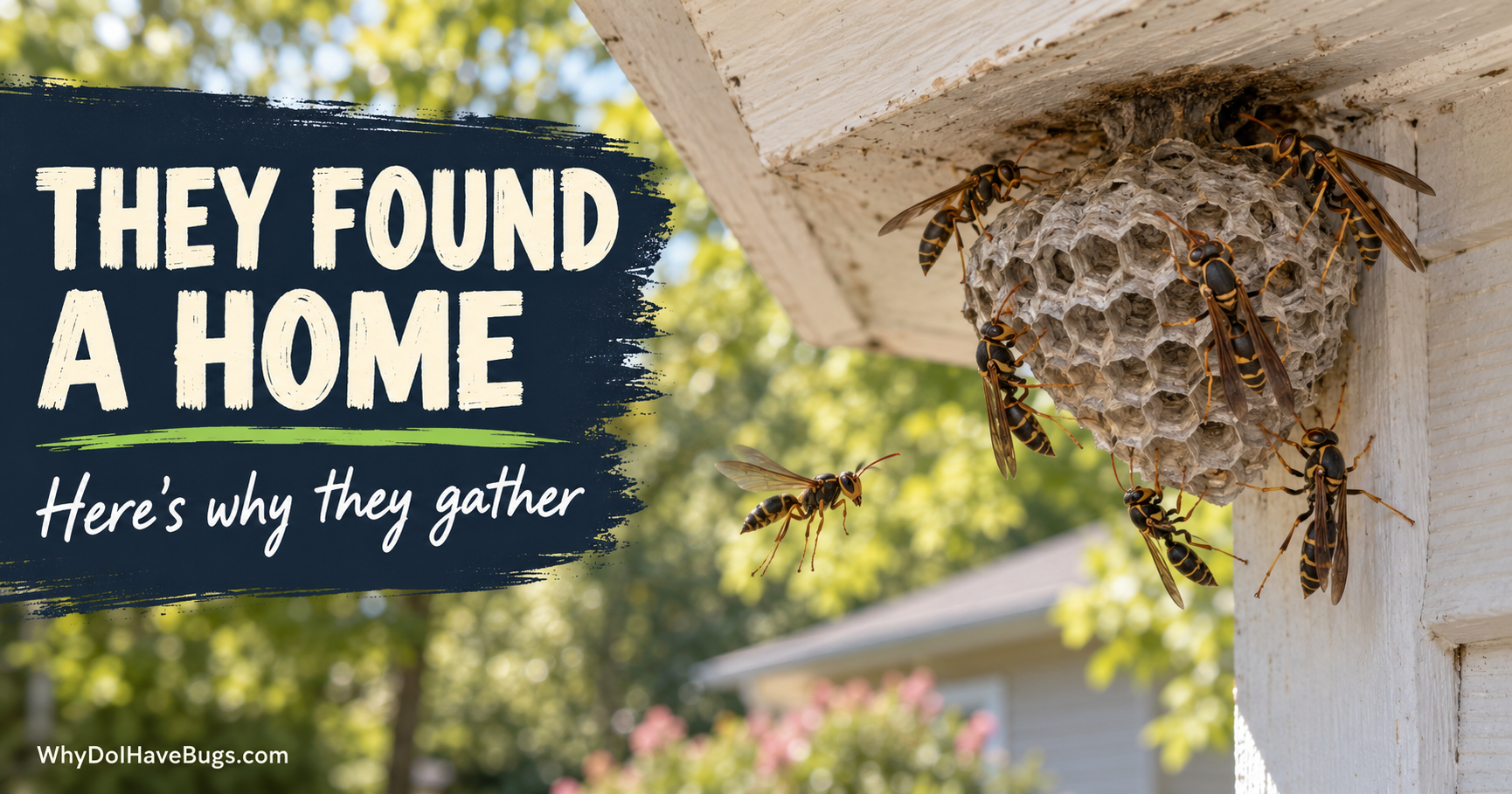
When wasps seem to be everywhere around your home, there is usually a real reason for it. Your porch, eaves, shed, barn, deck, trees, trash area, or outdoor eating space is giving them food, water, shelter, or a protected place to build a nest.
A few wasps moving through the yard is normal. A steady stream around the same roof edge, ground hole, porch corner, wall gap, or outbuilding usually means there is an active nest nearby.
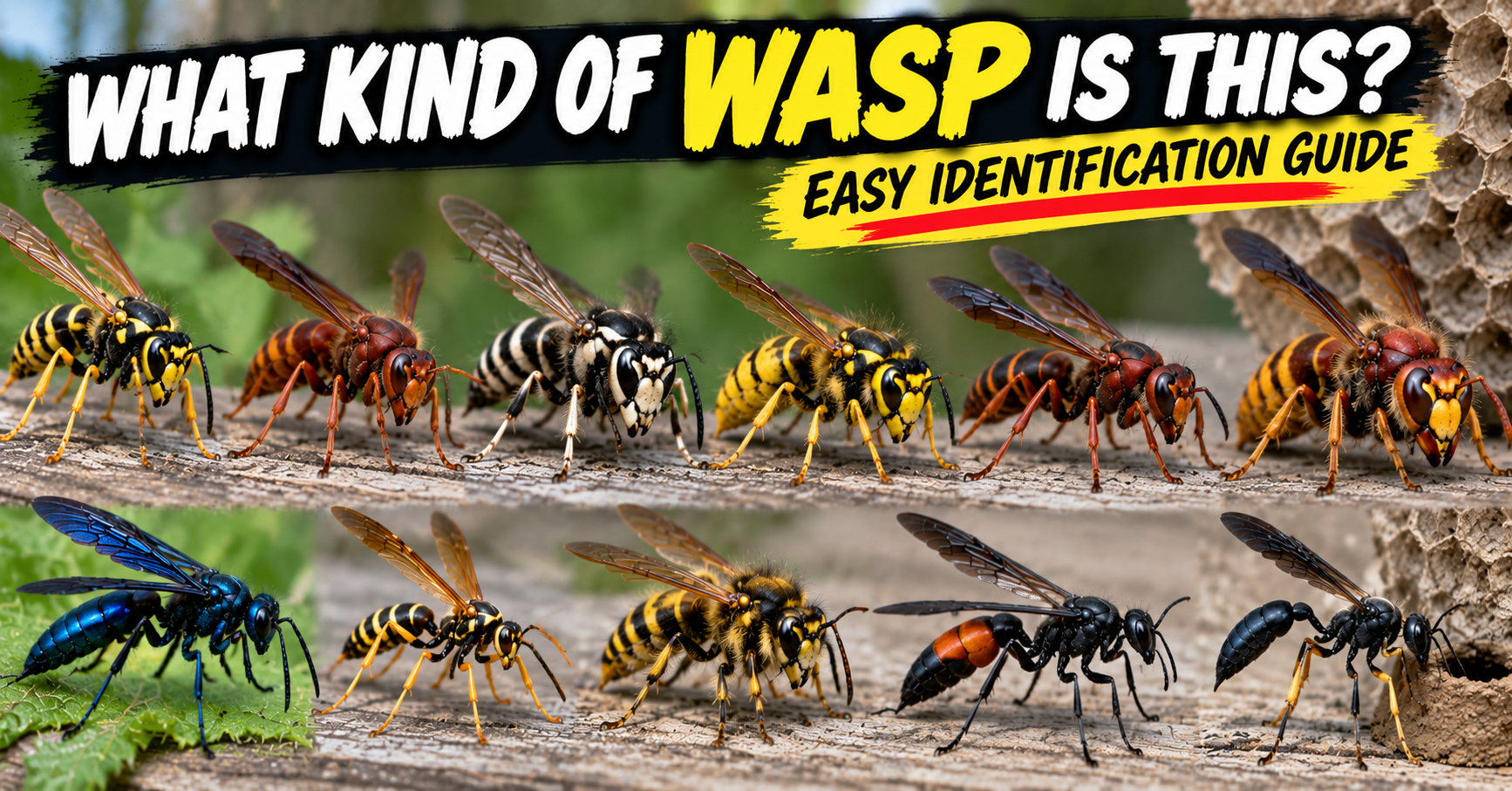
Before treating anything, it helps to know what type of wasp you are dealing with. Yellowjackets, paper wasps, mud daubers, hornets, and cicada killers all behave differently and use different nest sites. This easy wasp identification guide will help you narrow it down without getting close enough to risk a sting.
Your House Gives Wasps Good Places to Build Nests
Wasps naturally look for protected places that stay dry and sheltered from rain. Houses, sheds, barns, decks, grills, and outdoor furniture can offer more nest sites than people realize.
Paper wasps often build beneath eaves, porch ceilings, deck railings, barn rafters, light fixtures, grill lids, and outdoor equipment. Yellowjackets may nest in wall voids, soffits, crawlspaces, sheds, or holes in the ground beside the house.
Even a small gap can be enough for a queen to start a nest in spring. A nest that is barely noticeable in May can have a lot of workers by late summer.


Food Is Bringing Wasps Into Your Yard
Adult wasps are attracted to sweet food and drinks. Ripe fruit, soda, juice, hummingbird nectar, jam, garbage, pet food, and outdoor meals can all bring them closer to the house.
They also hunt insects. Paper wasps and yellowjackets catch caterpillars, flies, spiders, and other insects to feed their developing young. A property with plenty of insect activity can give wasps a reliable food source all summer.
Keep garbage lids closed, rinse sticky drink containers, pick up fallen fruit, and avoid leaving pet food outside for long periods. Those changes will not remove an established nest, but they can reduce the number of foraging wasps around your porch and yard.
Late Summer Is Often the Worst Time
A social wasp colony begins with one queen in spring. As summer goes on, the nest grows, more workers are produced, and the number of wasps you see can increase quickly.
By late summer, yellowjackets and other social wasps are also more likely to investigate sweet foods. That is why they can suddenly become a nuisance around trash cans, fruit trees, cookouts, drinks, and animal feed.
They are not angry for no reason. The colony is simply at its largest, with many more workers hunting for food and defending the nest if people get too close.
Water Sources May Be Attracting Them
Wasps need water, especially during hot and dry weather. They may visit birdbaths, pet bowls, livestock waterers, dripping faucets, puddles, pools, and damp ground.
If wasps keep gathering in one part of the yard, look for a water source nearby. You may not want to remove a birdbath or livestock waterer, but repairing a leaking faucet or avoiding standing water beside the house can help.
A wasp visiting water is different from one returning to a nest. Watch from a safe distance. If several wasps keep flying into the same crack, soffit opening, roof edge, wall gap, or ground hole, treat that as a likely nest location.

Fruit Trees, Gardens, and Compost Can Draw Them In
Wasps can be helpful around gardens because they hunt insects that damage plants. Trouble often starts when fruit ripens, falls, splits, or begins to ferment on the ground.
Pick up fallen fruit as regularly as you can. Harvest ripe fruit promptly, and remove fruit that is badly damaged, leaking juice, or starting to rot.

Garbage and compost can create the same problem. Wasps may be coming for sweet scraps, fruit juice, or the flies and insects gathering around the area. If flies are also gathering around these areas, recurring fly problems can help identify the food and breeding sources worth checking first.
Hidden Gaps Can Let Wasps Nest in Walls
Wasps can enter through gaps around siding, vents, soffits, attic openings, damaged screens, and utility lines. Once inside a wall or roof void, they can be protected from weather and hard to reach safely.
Do not seal a hole if you see active wasps flying in and out. Blocking their main entrance can force them to find another route, including a route into the house.
A nest inside a wall, attic, or inaccessible soffit is usually a good reason to call a pest professional. Spraying blindly into a structure can create a bigger problem and may not reach the nest.
How to Make Your Property Less Attractive to Wasps
You cannot remove every wasp from a rural property, and you would not want to. Many solitary wasps hunt pests and leave people alone. The goal is to reduce the kinds of wasp activity that create a sting risk around the places your family works and spends time.
- Keep trash lids closed and rinse sticky containers before throwing them away.
- Pick up fallen fruit and clean spills from outdoor tables.
- Repair dripping faucets and leaks near the house.
- Check eaves, sheds, decks, grills, and outdoor furniture regularly in spring.
- Seal inactive gaps around siding, vents, and utility lines.
- Avoid leaving pet food outdoors all day.
- Keep outdoor drinks covered during cookouts and gatherings.
The earlier you find a new paper wasp nest, the easier it is to decide whether it can be avoided or needs to be removed.
What to Do When You Find an Active Nest
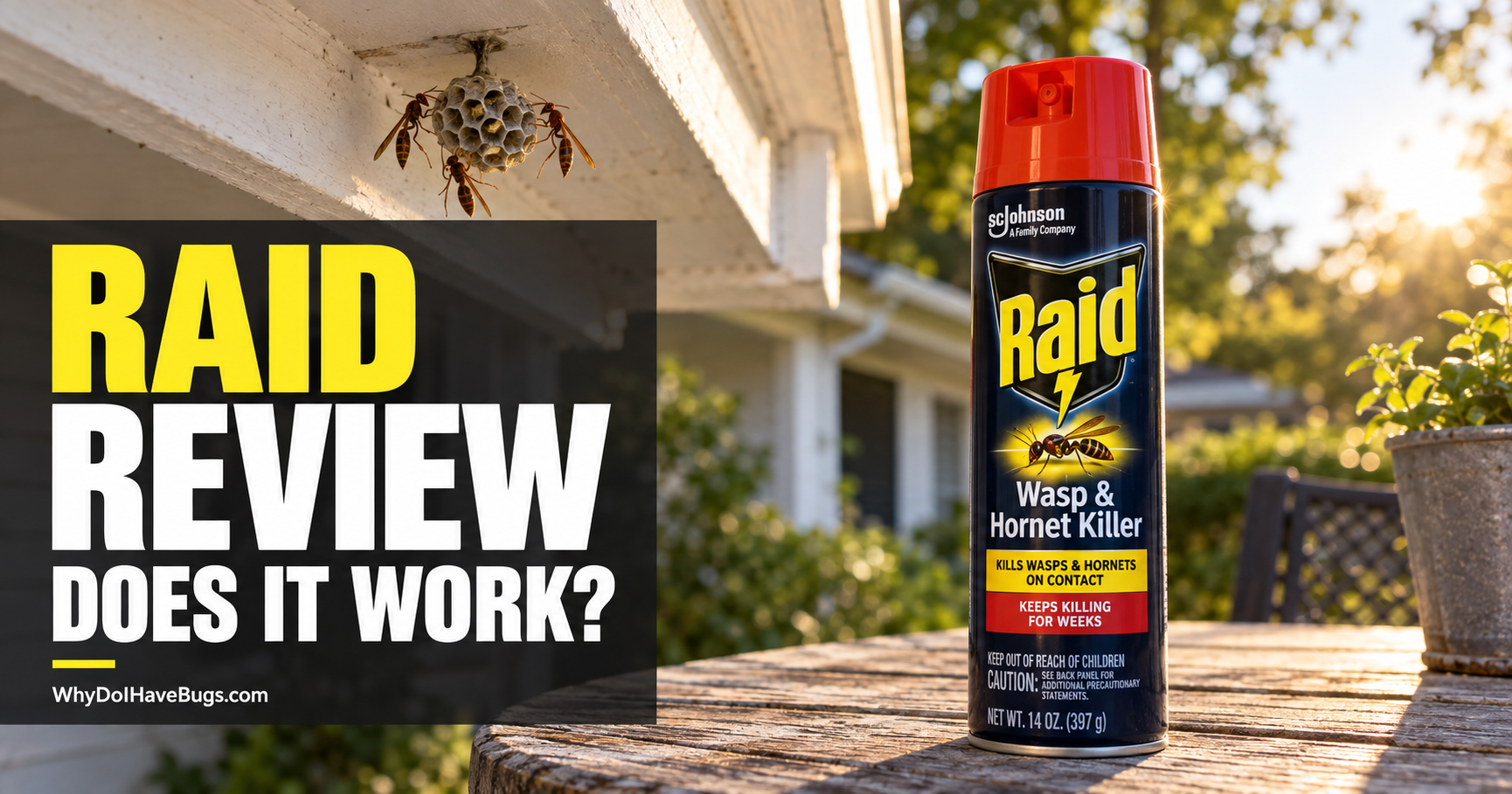
First, figure out whether the nest is in a place where people or animals are likely to disturb it. A small paper wasp nest high on a remote shed may be easy to avoid. A yellowjacket nest beside a doorway, animal pen, deck, play area, or mower path needs more attention. If the nest is exposed and safely reachable, small paper wasp nest may be one option to evaluate.
Do not mow, weed-eat, pressure wash, climb a ladder, or move equipment near a nest entrance until you know exactly where the activity is coming from. Yellowjackets in the ground can be especially easy to disturb by accident.
For small, exposed nests that you can safely reach from the ground and where the product label allows treatment, Raid Wasp and Hornet Killer Spray is made for paper wasps, yellowjackets, mud daubers, and other listed wasps. Read the label fully, follow its distance and application directions, wear the protective clothing it calls for, and never use it around an active nest when you cannot retreat safely.
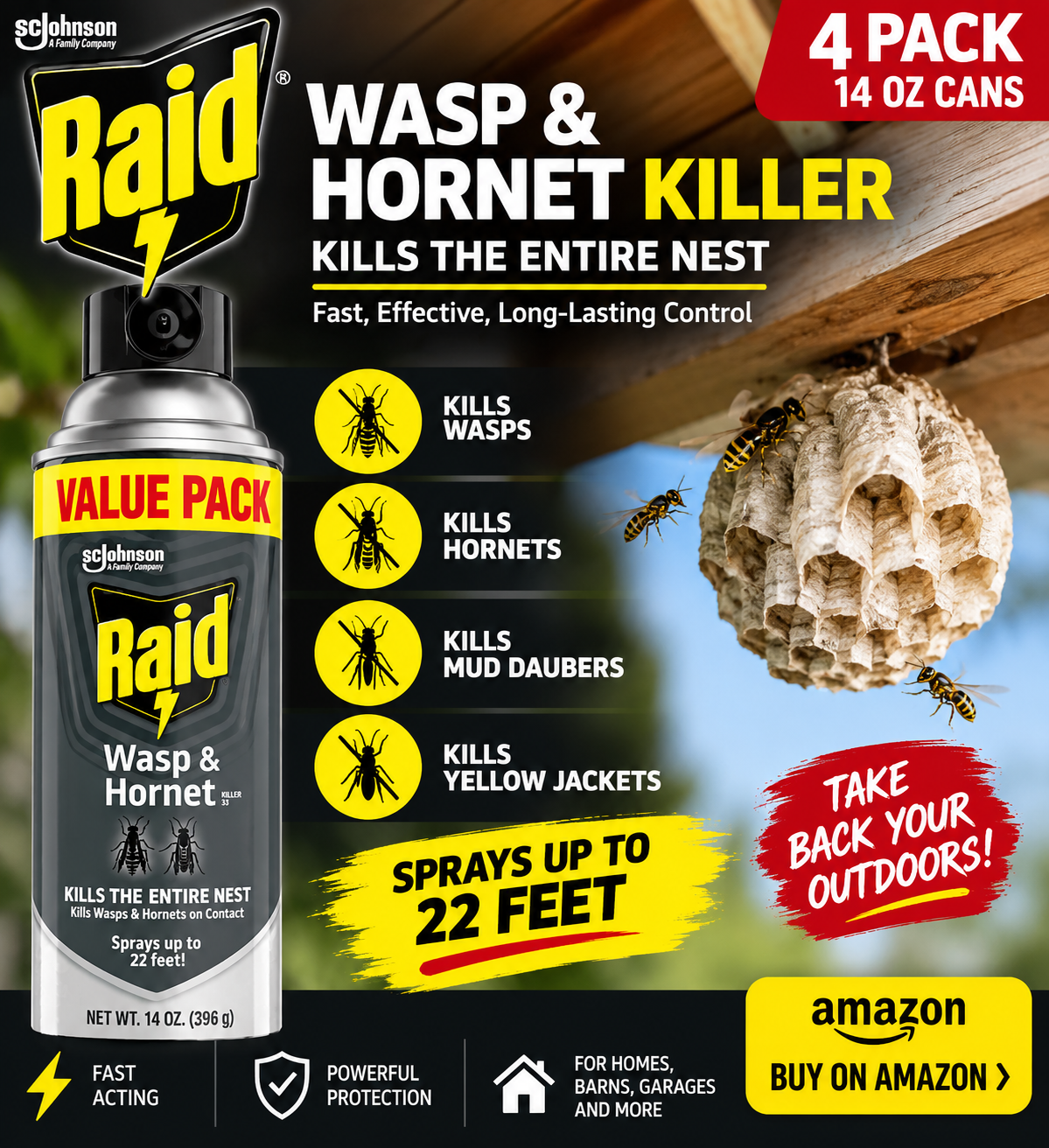
Do not use any spray on a nest inside a wall, in an attic, high on a ladder, or near a place where children, pets, or livestock could be exposed. Those situations call for a safer plan than a homeowner trying to reach the nest.
Why Wasps Keep Coming Back Every Year
Most worker wasps die once cold weather arrives. New queens survive winter in protected places, then search for nesting spots in spring.
The old nest is usually not reused, but the same eave, porch corner, shed beam, wall gap, or sunny ground area can be attractive again. That is why a property can feel like it has the same wasp problem every year.
Checking your usual trouble spots early in spring gives you the best chance to notice nests before they become large. A small open paper wasp nest is much easier to deal with than a mature hidden yellowjacket colony.
When a Wasp Problem Needs Professional Help
A pest professional is the safer choice when you have a nest inside a wall, attic, soffit, chimney, crawlspace, or another enclosed area. The same goes for large nests, nests high above the ground, and nests close to a doorway or busy part of the property.
Get professional help if someone in the household has a history of a severe allergic reaction to stings. It is not worth turning a manageable pest problem into an emergency.
The same advice applies to underground yellowjacket nests where people, pets, equipment, or livestock regularly pass. It is easy to underestimate how quickly a disturbed ground nest can become a problem.
Frequently Asked Questions
Why are there suddenly so many wasps in my yard?
Late summer colonies are much larger than spring colonies. Ripe fruit, trash, sweet drinks, insects, water, and nearby nest sites can also bring more wasps around.
Do lots of wasps mean I have a nest nearby?
Not always. A few may be foraging. A regular stream of wasps flying to the same ground hole, roof edge, wall opening, or soffit gap strongly suggests a nest nearby.
Why are wasps flying around my porch?
Porches offer protected nest sites under eaves and ceilings. Food, drinks, outdoor lights, nearby flowers, and cracks around the structure can also attract them.
Will removing one nest stop all the wasps around my house?
It will stop activity from that nest, but other wasps may still visit for food, water, or shelter. Removing attractants and sealing future nest sites helps reduce repeat activity.
Why are wasps worse around fruit trees?
Ripe, split, fallen, and fermenting fruit provide sugar that attracts wasps. Picking up dropped fruit and harvesting ripe fruit promptly can help.
Can I seal the hole where wasps are going into my wall?
Not while the nest is active. Sealing the entrance can force wasps to seek another exit, possibly inside the home. Have a professional inspect wall nests instead.
Do wasps come back to the same nest every year?
The old nest is not usually reused, but new queens may choose the same protected location if the area still offers shelter and easy access.
Caleb Warren writes practical home and garden pest guides for WhyDoIHaveBugs.com, helping homeowners identify pests and make informed decisions before treating them.